
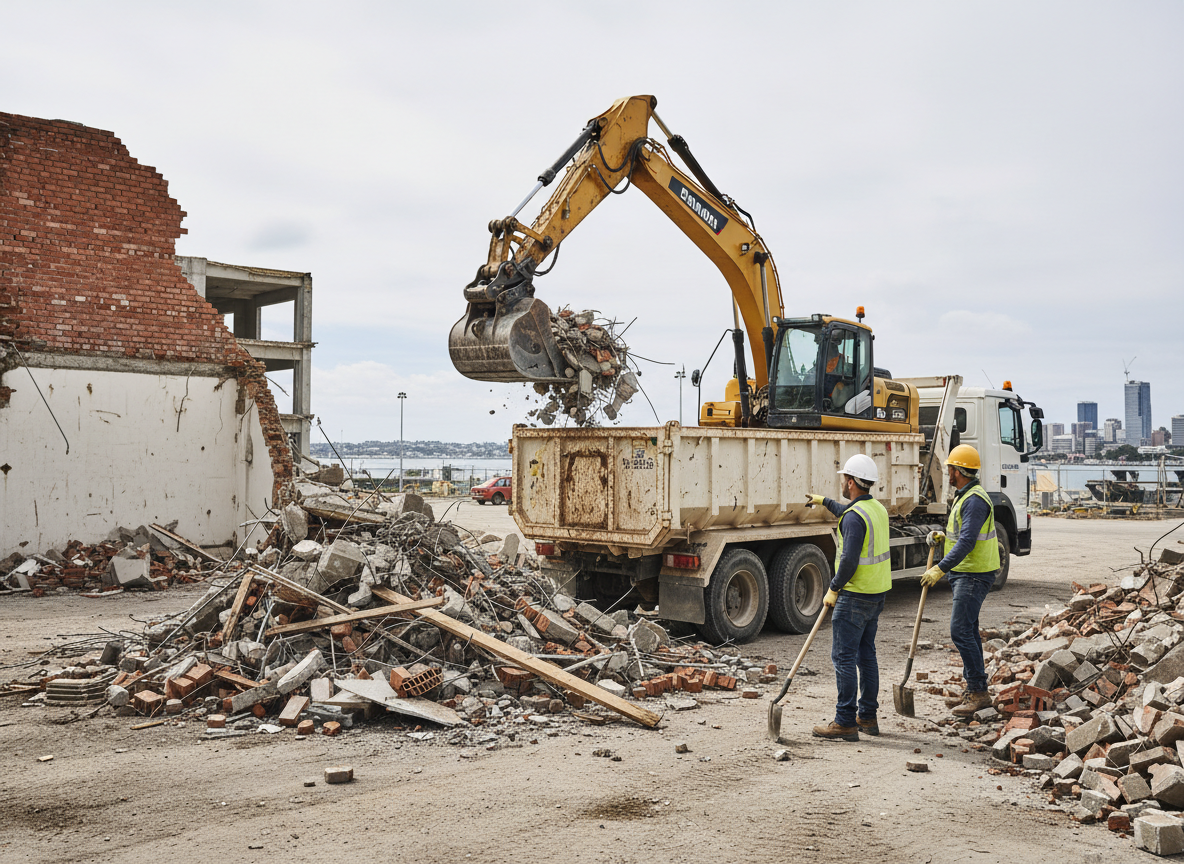
Demolition waste in Geelong is rarely one material. Weatherboard cottages in Geelong West and Newtown, brick veneer in Belmont and Highton, and post-war stock in Corio and Norlane all produce mixed loads: plaster, timber, brick, tiles and metal. A skip that is booked as ‘general waste’ will be rejected at the transfer station if it is heavy rubble, so we match bin type to what is actually coming off the job. Wet winters make soil cling to footings and slabs; dry summers raise dust and fire risk on timber piles. Either way the load has to stay legal and within the bin walls so collection stays on the same visit.
Older Geelong housing often hides asbestos cement sheet, especially in bathrooms and eaves from mid-century builds. We do not remove or bag asbestos; that work needs a licensed contractor before our bin arrives. What we do is take the remaining mixed demolition stream once the hazardous fraction is gone. Steep driveways in Highton and Newtown, narrow laneways behind shops in central Geelong, and clay that turns to glue after rain all change where a truck can sit. We check access before we quote so the bin is not left on a nature strip that Council will not allow.
Council rules in the Geelong area still apply on public land: permits, time limits and no overfilling. Private property jobs are simpler if the truck can reverse in without damaging kerbs or gardens. Mixed demolition is charged by volume and by how ‘clean’ the stream is; a bin full of brick and concrete is heavier and dearer to tip than one of timber and plaster. We give an upfront size recommendation so you are not paying for air or for a second trip because the first bin was too small. Hours are Monday to Friday 8am–6pm and Saturday 9am–2pm from our Geelong 3220 base.
Edge cases we see every season: part-demolitions where the roof stays on, so waste has to be carried out by hand; garage knock-downs on tight blocks in Grovedale; and reno jobs that mix kitchen carcasses with brick from a chimney. Each needs a different bin size and a clear rule on what cannot go in—liquids, tyres, batteries, gas bottles and anything that looks like asbestos. Tell us the suburb and the mix and we will say which skip actually fits the work, not a generic ‘building waste’ label.
Technician insight
In Geelong, the thing that catches most people out with demolition waste removal is mixing fibro or suspected asbestos with the rest of the load, especially in mid-century homes in Corio, Norlane and older weatherboard streets. Once that sheet is in the bin the whole skip can be rejected. The other local gotcha is clay after a wet week: it turns a ‘half-full’ brick bin into an overweight load the truck cannot legally lift. Separate the hazard first, keep brick and timber honest, and we can actually collect on the first visit.
Chimney and kitchen strip in Belmont
A homeowner had pulled a brick chimney and a 1970s kitchen and booked a general waste bin. We found mixed brick, plaster and cabinetry plus wet clay from the hearth. We swapped to a mixed demolition skip, kept fibro out of the load, and collected once the walls were level. The job left in one lift instead of a rejected bin and a second hire.
Demolition Waste Removal Services We Offer
✓Mixed Demolition Skip Bins
Bins for combined brick, timber, plaster and tiles from knock-downs and gut-outs in Geelong and surrounds, sized so the load stays legal at the tip.
✓Brick and Masonry Waste Removal
Heavier skips for chimney, wall and paving demolition where clay brick and mortar dominate the load across Belmont, Newtown and Highton.
✓Timber and Framing Waste Bins
Lighter mixed timber from weatherboard and roof framing jobs, kept separate from rubble so tipping stays cheaper and cleaner.
✓Concrete and Slab Rubble Hire
Bins for broken slab, paths and footings after demolition, allowing for clay soil that sticks in wet Geelong winters.
✓Post-Demolition Site Clean Skips
Final-pass bins once the structure is down, for leftover offcuts, packaging and scattered brick on residential blocks.
✓Renovation Gut-Out Waste Removal
Kitchen, bathroom and internal strip-outs that mix cabinetry with plaster and tile without turning the bin into a general-waste dump.
✓Garage and Shed Knockdown Bins
Compact or mid-size skips for fibro-free sheds and garages on tight Geelong blocks where truck access is limited.
Demolition Waste Removal Cost in Geelong, VIC
| Service | Typical Range | What Affects It |
|---|---|---|
| Mini skip for small gut-out | $180–$320 | Light timber and plaster; extra if overloaded or contaminated |
| 4–6 m³ mixed demolition | $280–$480 | Typical kitchen/bath strip; brick content and wet soil raise the tip |
| 8–9 m³ knockdown mix | $400–$650 | Heavier masonry and slab; access and second lift add cost |
| Concrete-heavy rubble bin | $450–$750 | Weight-limited; clay clinging after rain can push it up |
| Street-permit assistance | Council fee + admin | Only if the bin cannot sit on private land |
Ranges are typical for Geelong, VIC and confirmed with an exact written quote before any work starts.
How it works
- 1
Describe The Waste Mix
Tell us suburb, access and whether the load is brick-heavy, timber-heavy or mixed so we pick a legal bin type, not a guess.
- 2
Confirm Access And Timing
We check driveway, laneway and ground conditions in Geelong and surrounds, then book delivery in Mon–Fri 8am–6pm or Sat 9am–2pm windows.
- 3
Place The Bin
The truck sets the skip on private land where possible; we flag Council permit needs if it must sit on the street.
- 4
Fill Within The Walls
Load demolition waste only—no asbestos, liquids or prohibited items—and keep the load level with the rim for a single collection.
- 5
Collect And Tip
We swap or empty on the booked day and take the mixed stream to an appropriate facility for that material type.
Pricing
Price follows bin size, how heavy the rubble is, and whether the load is mixed or relatively clean. Access and extra trips move the figure more than the suburb name. We quote before we drop the bin—no invented ‘from’ rates that ignore brick weight.