
2026-09-05 ·
Demolition Skip Bin Hire Geelong: What Size Do You Need?
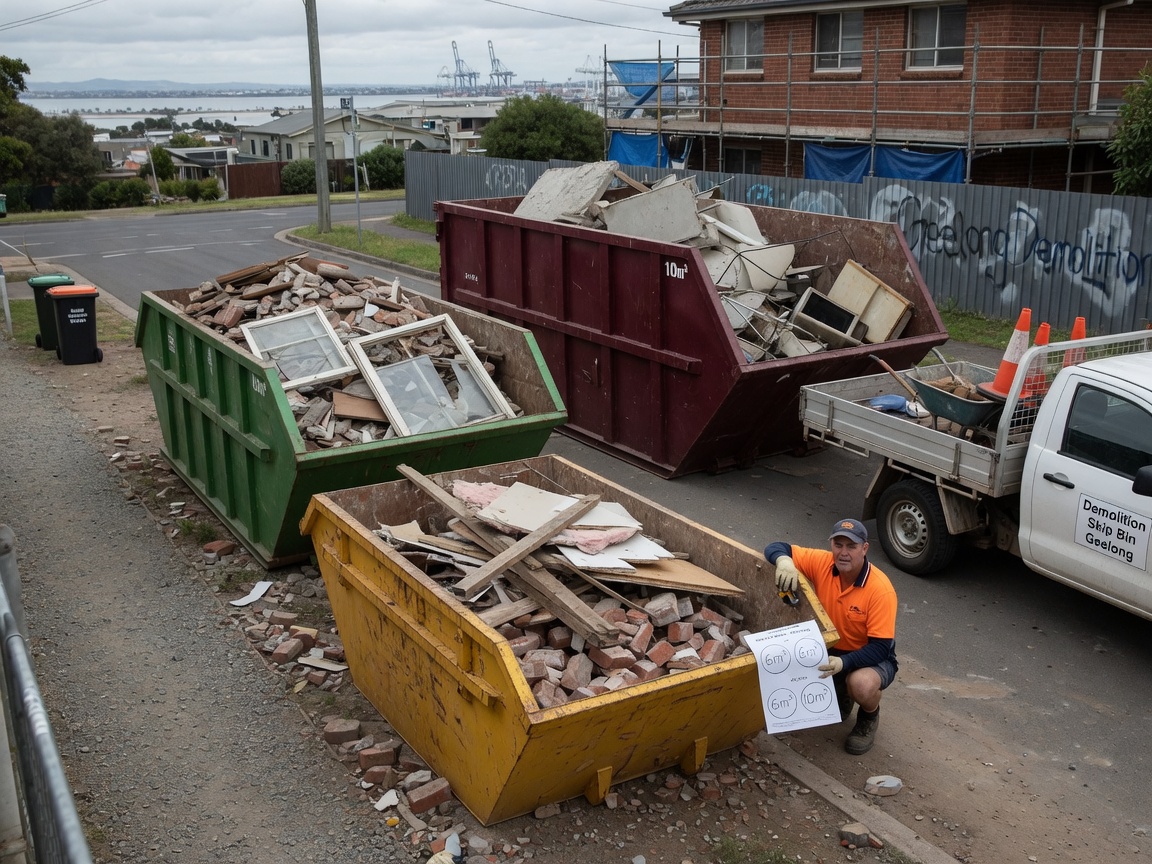
For most residential demolition and strip-out work in Geelong, a 6m³ to 12m³ skip is the size you need. A single-room knock-out or garage demolition often fits a 4m³–6m³. Full weatherboard cottages in Newtown or Geelong West, or brick veneer in Grovedale, commonly fill 8m³–12m³. Heavy brick, concrete and tile push you toward a dedicated heavy-waste bin or a second skip rather than overfilling one light mixed bin. A 20m³ skip only pays when you have a clear, truck-accessible pad and mixed building waste that is not mostly masonry.
Matching Skip Size To The Demolition Job
Start with what is coming down, not a guess at “a big bin”. Internal demolition—plasterboard, timber studs, kitchen joinery, carpet—packs volume but not extreme weight, so a 6m³ or 8m³ mixed bin often covers a bathroom and kitchen strip in Highton or Belmont. External work changes the maths. Roof tiles, brick veneer, concrete paths and footings are dense. Those loads belong in a concrete and brick skip or a demolition waste removal booking sized for weight, not just cubic metres. A 4m³ skip of brick can hit the legal payload before the bin looks full. A 12m³ of light timber and plaster rarely does. List rooms, note brick versus weatherboard, and separate soil and clean fill if you can. That split keeps you inside payload and avoids a rejected load at the transfer station. If the job is a shed, deck or fence only, drop down a size; those rarely need more than 6m³ unless the shed is full of stored junk.
Housing Stock Across Inner Geelong And Newer Estates
Inner Geelong, Newtown, Geelong West and South Geelong still hold a lot of Victorian and inter-war weatherboard with later brick additions. Those houses produce mixed timber, lath, plaster and some brick when walls come down. Volume is high; weight is moderate unless you take out chimneys or old hearths. Post-war brick veneer in Grovedale, Corio and Norlane is the opposite: more masonry, less timber, so the same floor area can need a heavier-rated skip or two smaller heavy bins. Armstrong Creek, Mount Duneed and Charlemont are newer: plasterboard, engineered timber and concrete slabs. Demolition there is often a failed build or a pool and paving job rather than a century-old cottage. Access is usually better on wide new streets, so a larger skip can sit on the nature strip or driveway without blocking a narrow lane. On older streets around the city, a 6m³ or 8m³ that the truck can drop and collect without scraping fences is often more practical than chasing a 15m³ you cannot site. Match the bin to the fabric of the house, not a generic “demolition” label.
Weight, Mixed Loads And Why Overfilling Fails
Skip hire is sold in cubic metres, but demolition is limited by tonnes. Mixed building waste that includes brick, tile, concrete and soil will hit the weight cap on a 6m³ or 8m³ long before the rim. Light mixed waste—timber, plaster, insulation, kitchen carcasses—can fill a 12m³ without the same risk. Do not mix clean fill or large concrete chunks into a general mixed bin if you can avoid it; those streams have different disposal paths and can trigger extra charges. Separate soil and dirt when you are digging footings or a pool. Keep asbestos, chemicals and gas bottles out entirely. If the load is mostly masonry, book a heavy-waste or brick-and-concrete skip even if the volume looks modest. If it is a full house gut with lots of plaster and timber, volume wins and a larger mixed bin is cheaper than two small ones. When in doubt, two 6m³ collections a few days apart beat one overloaded 12m³ that the truck cannot lift. We work Mon–Fri 8am–6pm and Sat 9am–2pm from Geelong, Vic 3220, so you can time the swap to the demolition sequence rather than living with a full bin on site.
Access, Streets And When A 20m³ Bin Makes Sense
A skip is only useful if the truck can drop it and pick it up. Inner blocks in Newtown, East Geelong and Manifold Heights often have narrow frontages, steep drives and parked cars. A 4m³–8m³ is the realistic maximum there. Wider lots in Waurn Ponds, Lara and Leopold can take a 12m³ on the driveway if you protect the concrete and leave swing room for the truck. A 20m³ skip needs a long, clear pad, no overhead wires at the drop point, and a load that is not mostly brick. It suits large mixed jobs—warehouse strip-outs, full house demolitions with timber-heavy frames—not a brick garage. Permit rules for nature-strip placement still apply; check with the City of Greater Geelong before you assume the verge is free. If access is tight, two sequential smaller bins beat one oversized skip that never gets delivered. For a fuller size chart beyond demolition, see skip bin sizes in Geelong. Size the first bin to the heaviest stream, then add a second for light waste if the job grows. That is how you finish a demolition without a half-empty giant bin or a truck that cannot lift the load.